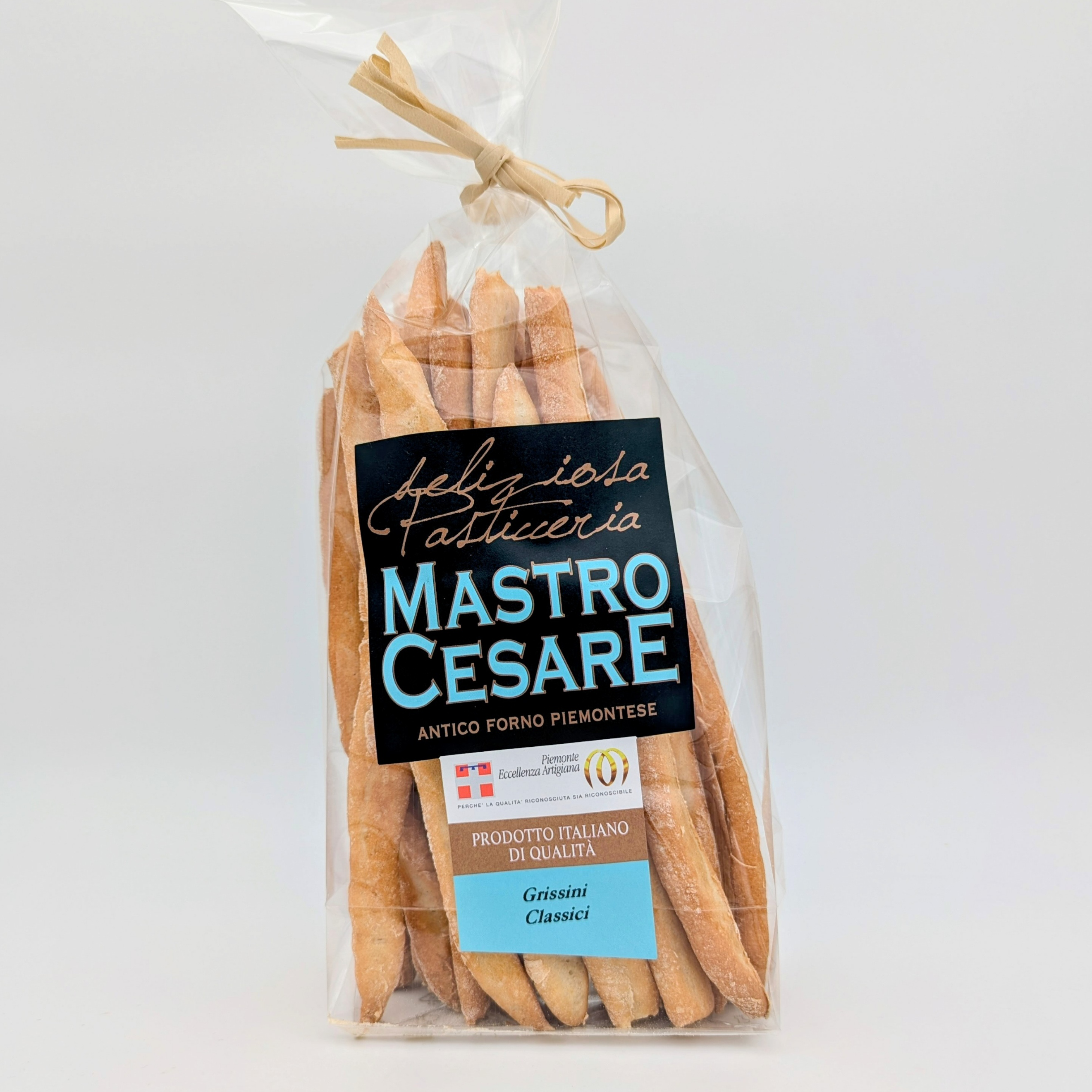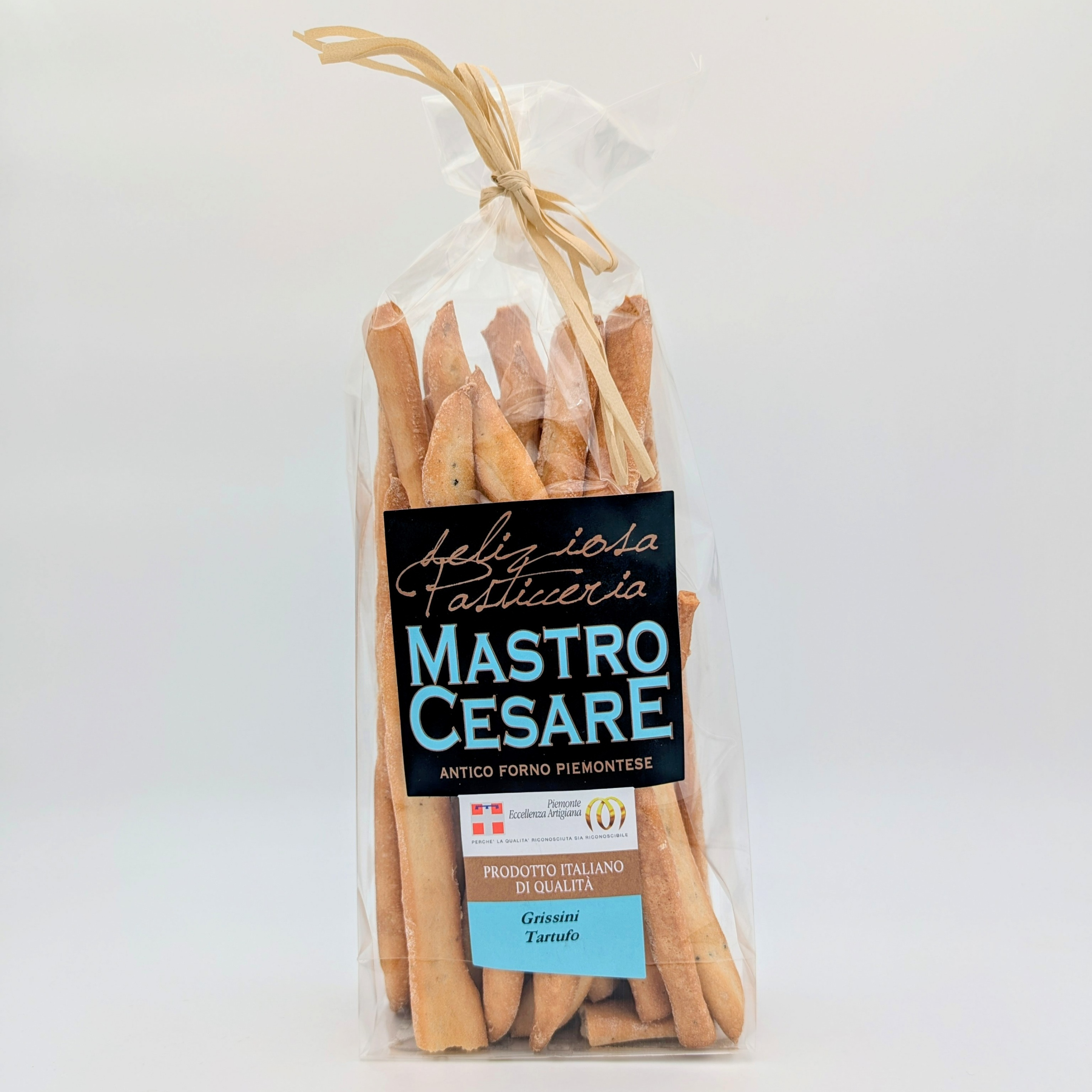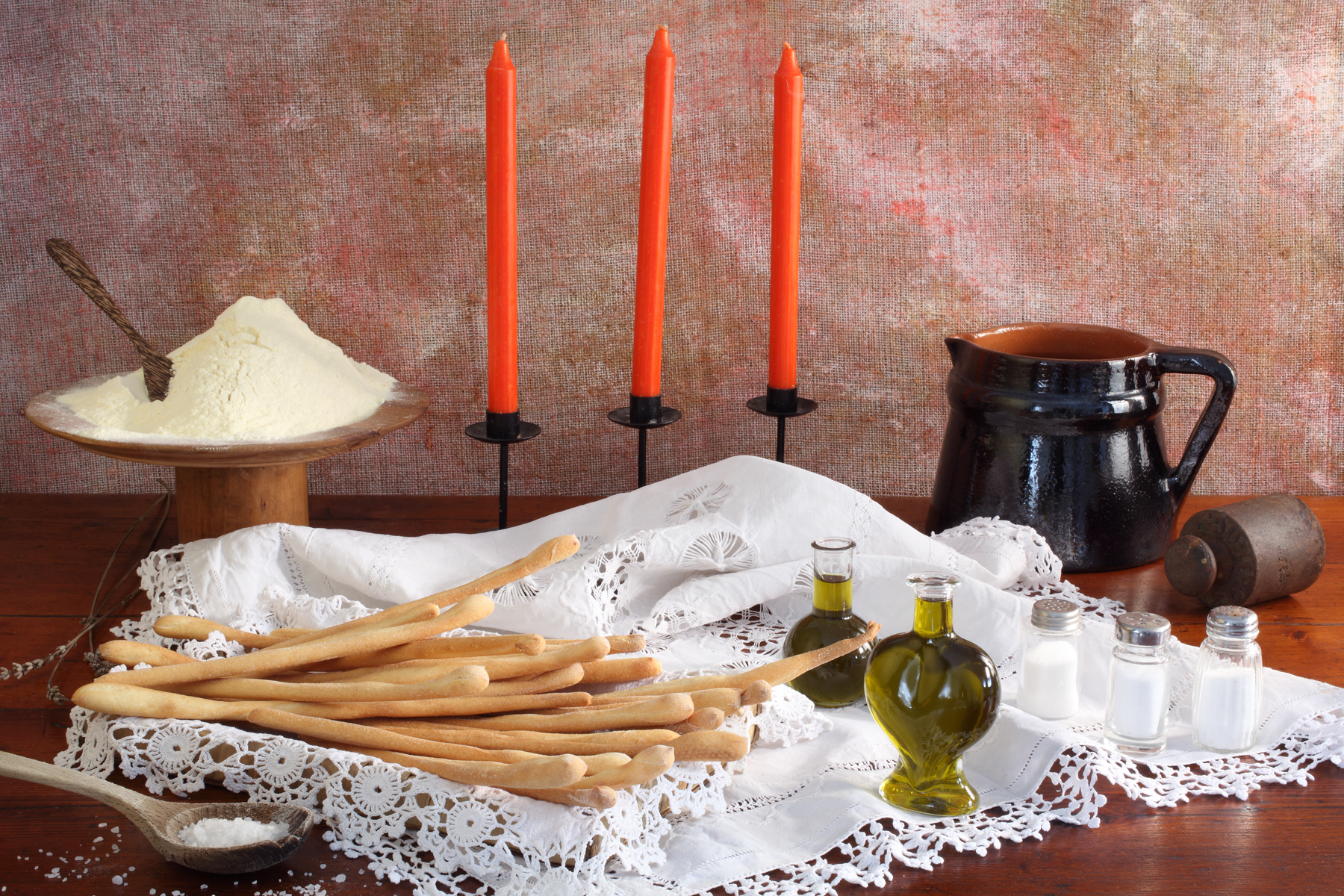
The story of grissini: from Piedmont to tables around the world
Thin, fragrant, crisp. Few products seem as simple as a grissino, yet behind this small breadstick lies a story spanning centuries, deeply tied to Piedmont and the city of Turin.
Today grissini accompany bread on tables all over the world, found in restaurants, delicatessens and the pantries of millions of families. But to truly understand their appeal, we need to go back in time, to when Piedmont was still the land of the House of Savoy and bread was one of the fundamental staples of daily life.
From Piedmontese bread, the grissino is born
The name itself tells us something about its origins.
The word grissino is thought to derive from grissia or gherssa, an old Piedmontese bread with a narrow, elongated shape. Over time, this bread is believed to have become progressively thinner and lighter, eventually turning into gherssin — literally a small gherssa: our grissino.
Sources from the Piedmont Region place the appearance of the grissino at least around the mid-1600s, although its exact origin remains debated.
And it is precisely from this uncertainty that one of the most fascinating legends of Italian gastronomy is born.
The young duke and the court's grissino
According to tradition, in 1679 the young Vittorio Amedeo II of Savoy, future King of Sicily and later of Sardinia, suffered from frequent digestive problems.
The physician Teobaldo Pecchio, from Lanzo, is said to have attributed part of the young prince's troubles to the bread of the time, which was often heavy and not fully baked.
He is said to have then asked the court baker, Antonio Brunero, to prepare a thinner bread — well baked, crumbly and easy to digest.
This, according to the traditional account, is how a long, thin breadstick was born — one destined to become the grissino.
In Lanzo Torinese, a plaque still commemorates this story today.
The historical reality, however, is probably even more interesting than the legend: documents and studies indicate that bread forms resembling grissini were already known before this. Rather than inventing it from nothing, then, the Savoy court may have helped refine, spread and make famous a product that already existed within Piedmontese tradition.
A bread unlike any other
The grissino's success didn't depend on its shape alone.
Prolonged baking removed most of the moisture from the dough, producing a light, crumbly product that kept well.
At a time when keeping bread fresh for long was anything but simple, this was an extraordinary advantage.
And then there was the gesture.
Traditionally, the grissino wasn't simply shaped: the dough was worked by the baker's expert hands, pulled, stretched, or rolled on the work surface.
A seemingly simple task that required — and still requires today — sensitivity, experience and a deep knowledge of the dough.
Stirato and Rubatà: the two souls of the Piedmontese grissino
Piedmontese tradition preserves mainly two great families of grissini: the Stirato and the Rubatà.
The Stirato grissino is made from strips of dough that are held at each end and gently stretched by hand. They can reach considerable lengths and are known for their lightness, crumbliness and crunch.
The Rubatà, on the other hand, takes its name from the Piedmontese word meaning "rolled." The dough is rolled with the palms of the hands on the work surface. The result is a generally shorter grissino, irregular in shape and strongly artisanal in appearance, one that can even bear the imprint of the baker's fingers.
Both are recognised among the Traditional Agri-Food Products of Piedmont (PAT).
From Piedmont to the world
What had begun as a distinctive Piedmontese bread slowly crossed the region's borders.
Its crunch, long shelf life and convenience all helped its spread, turning the grissino from a local specialty into one of the most easily recognisable products of Italian gastronomy.
And perhaps this is precisely its greatest distinction.
The grissino has managed to travel through the centuries without losing its identity: flour, water, yeast, salt, the time it needs, and the knowledge held in the hands that work the dough.
Over the years, countless variations have emerged: with rosemary, sesame, olives, cheeses, grains and many other ingredients. And yet, behind every variety, that same idea born centuries ago in Piedmont remains recognisable: turning bread into something thin, fragrant and irresistibly crisp.
A tradition that continues
Telling the story of the grissino also means telling part of the story of Piedmontese baking.
It's the story of a seemingly simple product that has passed through royal courts, bakers' workshops and generations of artisans, all the way to our tables today.
And perhaps this very simplicity is its secret.
Because a good grissino doesn't need to hide behind complexity: it should smell of the oven, snap with a clean sound, and leave behind the taste of good raw ingredients and good baking.
For over three centuries, the grissino has continued to do exactly that. And its story, even today, is rewritten every time a new batch of dough enters the oven.